How to Drive in Snow Safely for Beginners
Winter Weather • By Jon Snow • June 08, 2026
Updated on Jun 04, 2026 - 12:10 PM
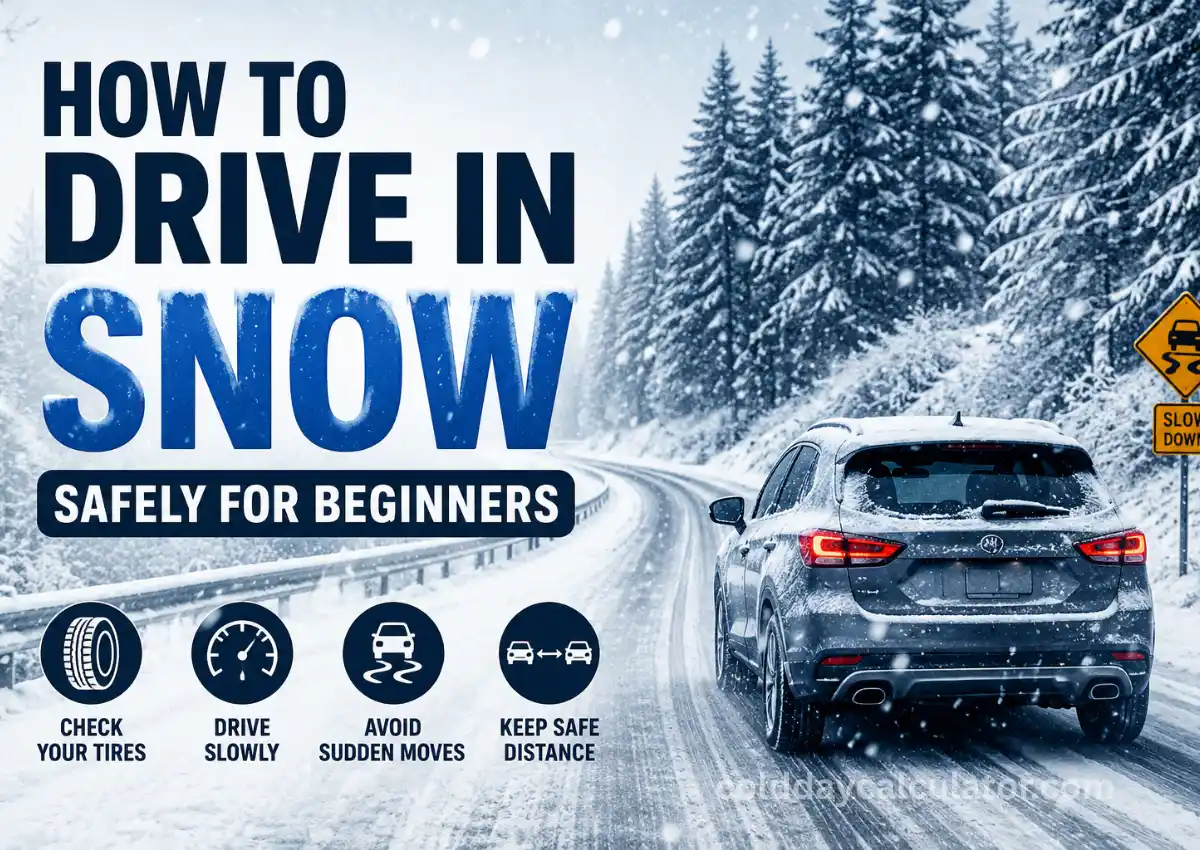
If you are learning how to drive in snow for the first time, the experience can feel stressful and unpredictable. Snow-covered roads reduce tire grip, increase stopping distance, and make steering much harder than normal driving conditions. Even experienced drivers become cautious during winter storms because snow and ice can change road conditions within minutes.
The good news is that safe snow driving is mostly about preparation, patience, and smooth control. Once you understand how winter roads affect your vehicle, driving in snow becomes much more manageable and far less intimidating.
According to the Federal Highway Administration, more than 1,300 people are killed and over 116,000 injured every year in crashes involving snowy, slushy, or icy roads in the United States. That’s why beginners should learn proper winter driving techniques before heading onto snow-covered streets or highways.
This beginner-friendly guide explains exactly how to drive in snow safely, what mistakes to avoid, how to handle skids, how to brake correctly, and what real-world winter driving habits actually help during dangerous snow conditions.
You can also track freezing weather, snow forecasts, and winter conditions anytime at Cold Day Calculator.
Understand Why Snow Driving Feels Different
Driving on snow is completely different from driving on dry pavement because your tires lose traction much faster.
On normal roads, rubber tires grip the surface tightly. But snow, slush, and ice create a slippery layer between your tires and the road, reducing control over:
- Steering
- Braking
- Acceleration
- Cornering
This is why sudden movements become dangerous during winter driving. Fast braking or aggressive steering can quickly cause your vehicle to skid.
Prepare Your Car Before Driving in Snow
Before driving in winter conditions, your vehicle needs proper preparation.
Many snow-related accidents happen because drivers underestimate how important winter-ready equipment is.
1. Check Your Tires Carefully
Tires are the most important part of winter driving safety.
If possible, use winter tires because they are specifically designed for snow and ice. Their rubber stays softer in cold temperatures, improving traction significantly.
If you do not have snow tires:
- Check tread depth
- Ensure tire pressure is correct
- Avoid worn-out tires
Low tread dramatically increases sliding risk on snowy roads.
2. Keep Your Fuel Tank At Least Half Full
Cold weather can create unexpected traffic delays or road closures.
Keeping extra fuel helps:
- Prevent fuel-line freezing
- Keep the heater running if stranded
- Reduce emergency risks
3. Clear Snow Off Your Entire Vehicle
Never drive with snow covering your:
- Roof
- Windows
- Mirrors
- Lights
- License plate
Snow blowing off your roof can reduce visibility for other drivers and become dangerous on highways.
4. Carry a Winter Emergency Kit
Every beginner driver should carry:
- Blankets
- Flashlight
- Phone charger
- Ice scraper
- Water
- First-aid kit
- Jumper cables
- Small shovel
Winter weather can trap vehicles unexpectedly during major storms.
Start Driving Slowly
The biggest mistake beginners make is driving too fast for snowy conditions.
Even if roads look lightly covered, hidden ice may exist underneath.
When starting your trip:
- Accelerate gently
- Avoid sudden steering
- Increase following distance
- Drive below normal speed limits
Snow driving rewards patience, not speed.
Increase Following Distance Dramatically
Stopping distances become much longer on snow.
On dry roads, drivers usually leave around 3 seconds of following distance. In snow, experts recommend increasing this to at least 8–10 seconds.
This gives you more time to react if another vehicle loses control or suddenly brakes.
One major lesson from the pileup on Interstate 35W in Fort Worth, Texas during February 2021 was how quickly icy roads and limited stopping distance can create chain-reaction crashes involving dozens of vehicles.
Brake Slowly and Early
Learning how to brake correctly is one of the most important snow driving skills.
Sudden braking locks tires and increases skidding risk.
Instead:
- Brake gently
- Start slowing down earlier
- Apply steady pressure
- Avoid slamming brakes
If your vehicle has ABS brakes, you may feel vibrations during emergency braking. This is normal and means the anti-lock braking system is working correctly.
Learn How to Handle a Skid
Skidding is one of the scariest experiences for beginner snow drivers, but panicking usually makes it worse.
If your rear tires slide:
- Stay calm
- Take your foot off the accelerator
- Look where you want the car to go
- Steer gently in that direction
Do not jerk the wheel aggressively because overcorrection often causes spinouts.
Most skids happen because drivers brake too hard or turn too sharply.
Avoid Using Cruise Control
Never use cruise control during snowy or icy conditions.
Cruise control can continue accelerating even when tires lose traction, increasing the risk of sliding or hydroplaning on slush.
Winter driving requires constant speed adjustments based on changing road conditions.
Drive Smoothly Around Turns
Sharp turns become dangerous in snow because tires lose side traction more easily.
Before entering a curve:
- Slow down early
- Brake before turning
- Avoid accelerating hard mid-turn
- Use smooth steering inputs
Many winter crashes happen on highway ramps and curved roads because drivers enter too quickly.
Watch Carefully for Black Ice
Black ice is one of the most dangerous winter road hazards because it is often invisible.
It commonly forms:
- On bridges
- Overpasses
- Shaded roads
- Early mornings
- Late nights
If roads look shiny or wet during freezing temperatures, black ice may already be present.
Slow down immediately and avoid sudden movements.
Use Lower Gears on Hills
Snow-covered hills are especially difficult for beginners.
When driving downhill:
- Shift into lower gear if possible
- Reduce braking pressure
- Let engine braking help slow the vehicle
Heavy braking downhill often causes sliding.
When driving uphill, maintain steady momentum and avoid stopping unless absolutely necessary.
Know When Not to Drive
One of the smartest winter driving decisions is sometimes staying off the road entirely.
If conditions include:
- Blizzard warnings
- Whiteout visibility
- Freezing rain
- Untreated highways
- Severe ice accumulation
it may be safer to delay travel.
Even professional drivers avoid roads during major winter storms.
Practice in an Empty Parking Lot First
Before driving in heavy traffic during snow, practice basic winter handling in an empty snowy parking lot.
This helps beginners safely learn:
- How braking feels
- How traction changes
- How skids happen
- How steering responds
Controlled practice builds confidence much faster than learning during real highway emergencies.
Keep Your Headlights On
Snow reduces visibility dramatically.
Always use headlights during winter driving even during daytime snowfall because it helps other vehicles see you sooner.
Visibility often becomes more dangerous than the snow itself.
Watch Out for Snowplows
Never follow snowplows too closely.
Snowplows create:
- Reduced visibility
- Flying ice
- Sudden snow spray
- Unexpected road edges
Stay well behind them and only pass when roads are fully clear and legal.
Real Historical Winter Driving Incidents
Several major winter disasters highlight why snow driving safety matters.
Texas Winter Storm 2021
The February 2021 winter storm caused hundreds of vehicle crashes across Texas because roads froze rapidly in areas unprepared for severe ice conditions.
Interstate 80 Wyoming Pileups
Wyoming highways frequently experience chain-reaction crashes during whiteout blizzards because strong winds reduce visibility almost instantly.
Buffalo Blizzard 2022
The Buffalo Christmas blizzard stranded drivers in extreme snowfall and dangerous whiteout conditions, leading to numerous fatalities and abandoned vehicles.
These incidents show how quickly winter roads can become life-threatening.
Common Beginner Mistakes in Snow
- Driving too fast
- Braking suddenly
- Following vehicles too closely
- Ignoring weather warnings
- Using bald tires
- Oversteering during skids
- Using cruise control
- Driving without clearing windows fully
Avoiding these mistakes dramatically improves winter driving safety.
What Experienced Snow Drivers Actually Recommend
Most beginner snow driving guides focus only on technical advice, but experienced winter drivers often approach snow roads very differently. After reviewing discussions from drivers who regularly handle mountain highways, icy roads, and severe winter conditions, several real-world driving habits consistently appeared. The biggest lesson repeated again and again was simple: smooth driving matters more than aggressive control.
Drive Like You’re Carrying Something Fragile
One experienced driver described snow driving using a memorable comparison that perfectly explains the mindset beginners should have.
While humorous, the advice reflects a real winter-driving principle: smooth inputs.
Experienced snow drivers avoid:
- Sudden braking
- Aggressive steering
- Fast acceleration
- Sharp lane changes
Gentle movements help tires maintain traction on slippery roads.
Only Ask Your Tires to Do One Job at a Time
Several winter drivers emphasized avoiding multiple actions simultaneously.
For example:
- Do not brake hard while turning
- Do not accelerate aggressively during curves
- Do not sharply steer while braking
Snow and ice drastically reduce available tire grip. Trying to brake, steer, and accelerate all at once often causes spinouts.
This is one reason many winter crashes happen on intersections, highway ramps, and curved roads.
Practice Sliding Before You Need It
Many experienced drivers recommended practicing basic snow handling in an empty snowy parking lot before driving in traffic.
This helps beginners safely learn:
- How ABS braking feels
- How skids happen
- How traction changes
- How steering responds on snow
Controlled practice makes real-world snow driving much less stressful.
Chains Are Often More Important Than Beginners Expect
Drivers traveling through mountain regions repeatedly stressed the importance of carrying snow chains, especially for front-wheel-drive vehicles.
In many mountain states, chain controls become mandatory during active storms even if roads initially appear clear.
Experienced drivers also recommended:
- Practicing chain installation before trips
- Checking chain size carefully
- Carrying gloves during installation
- Learning local chain-control laws
Many beginners underestimate how difficult installing chains becomes during freezing roadside weather.
Black Ice Is More Dangerous Than Visible Snow
One recurring warning from experienced winter drivers involved black ice.
Unlike visible snow, black ice can appear almost invisible while making roads extremely slippery.
High-risk areas include:
- Bridges
- Overpasses
- Shaded roads
- Mountain curves
- Early morning highways
Many experienced drivers assume every shaded winter road may contain hidden ice.
Do Not Panic During a Slide
Several drivers strongly warned beginners against slamming on the brakes during skids.
If the car starts sliding:
- Stay calm
- Ease off the accelerator
- Steer gently where you want the vehicle to go
- Avoid overcorrecting
Panic reactions often make snow-driving accidents worse.
Snow Driving Is Mostly About Patience
Perhaps the most useful insight from experienced winter drivers is that snow driving is more about patience and anticipation than advanced driving skill.
Most safe winter drivers simply:
- Slow down earlier
- Leave more space
- Avoid sudden movements
- Respect changing road conditions
That mindset alone dramatically reduces winter driving risk.
Reference: Real-world beginner snow driving advice and winter driving experiences were researched from this Reddit discussion: Tips for first time driving in the snow? – Reddit
FAQs About Driving in Snow
Is driving in snow hard for beginners?
It can feel challenging initially, but proper preparation and slow, careful driving make it much safer and easier to manage.
What speed should you drive in snow?
Always reduce speed below normal limits depending on road conditions. There is no single safe speed for all snow situations.
Are AWD vehicles safer in snow?
All-wheel drive improves traction during acceleration, but it does not improve braking distance on ice.
Should beginners drive during snowstorms?
Beginners should avoid severe storms whenever possible and gain experience gradually in lighter conditions first.
What is the most dangerous winter road condition?
Black ice is often considered the most dangerous because it is difficult to see and extremely slippery.
Final Thoughts
Learning how to drive in snow safely takes patience, preparation, and practice. Snowy roads demand slower speeds, smoother movements, and greater awareness than normal driving conditions.
For beginners, the safest approach is staying calm, avoiding sudden actions, and respecting how quickly winter roads can change.
With proper winter tires, safe following distance, gentle braking, and careful steering, driving in snow becomes far more manageable and much less stressful over time.
Resources
- National Highway Traffic Safety Administration
- Federal Highway Administration
- National Weather Service Winter Safety

Related Posts
Top 10 Tips on Snow Removal Careers
Snow removal is one of the easiest winter jobs to get into, but most people go about it the wrong wa...

Best Mountains to Ski in Canada
Canada has some of the best ski mountains in the world. Big snow, long seasons, and slopes for every...

12 Tips for Cold Weather Hair
Cold air holds less moisture than warm air, and indoor heating dries things out even more. Put those...