12 Tips for Cold Weather Hair
Winter Weather • By Jon Snow • September 14, 2026
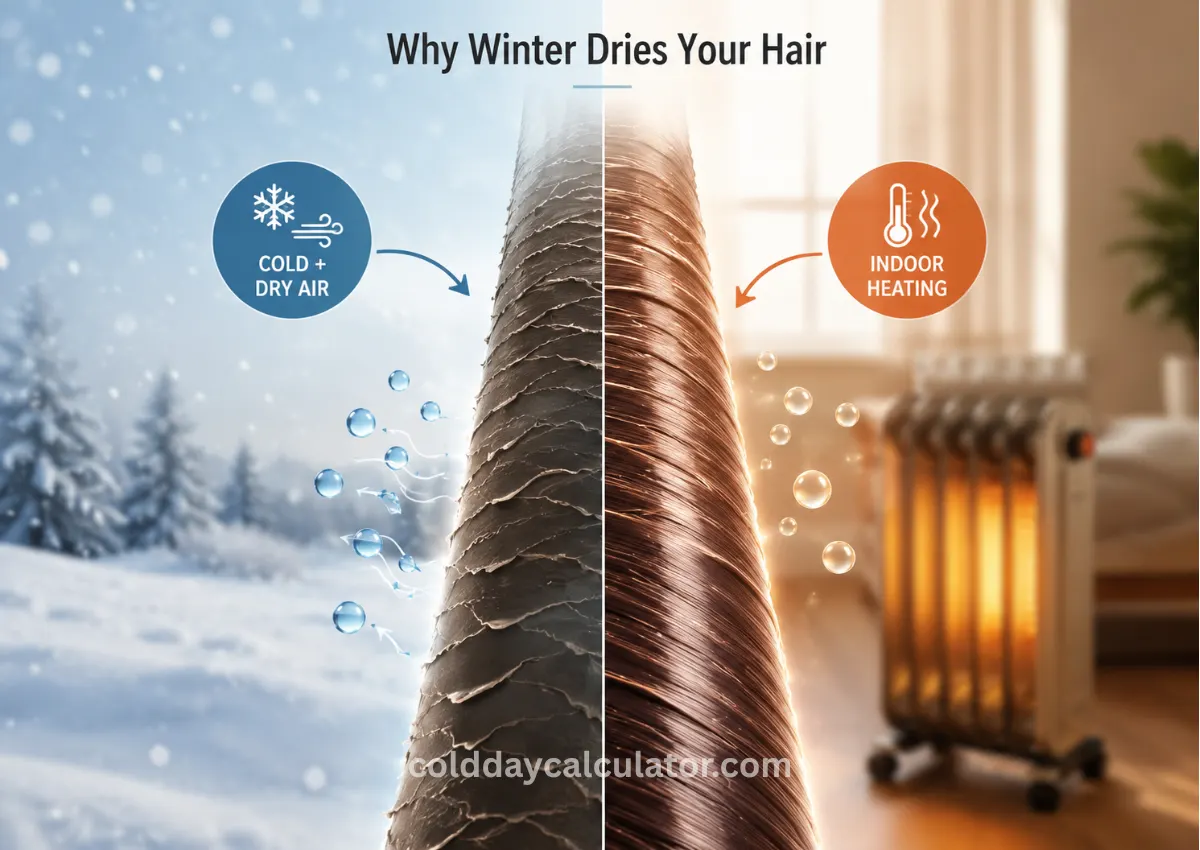
Cold air holds less moisture than warm air, and indoor heating dries things out even more. Put those two together and your hair takes a hit every winter: dryness, frizz, breakage, static, sometimes more shedding than usual. None of that is permanent damage. It's a routine problem, and a few small changes fix most of it.
1. Drink enough water and eat hydrating foods
Hair pulls moisture from your body before anything else, so dehydration shows up in your hair before you notice it anywhere else. Aim for around 2 liters of water a day, and lean on winter foods that help too: sweet potatoes, carrots, and dark leafy greens all support healthy hair growth.
2. Switch to a richer, more moisturizing conditioner
Your regular conditioner might not be enough once the air dries out. Swap in something heavier for the winter months, and apply it right after you rinse out shampoo, while your hair can still hold onto the moisture.
3. Wash your hair with lukewarm water, not hot
Hot showers feel good in winter, but hot water opens the hair cuticle and lets moisture escape, which leaves you drier than before you washed it. Lukewarm water closes the cuticle and holds your hair's natural oils in. Warm up with a hot bath first if you need to, just keep the water on your head lukewarm.
4. Stretch out the days between washes
Washing less often in winter actually helps. Overwashing strips natural oils your hair needs more of this time of year, not less. If you normally wash every day, try every other day. If you already wash every few days, try adding one more day and see how your hair handles it.
5. Deep condition once a week
A weekly deep conditioning treatment or hair mask replaces moisture that daily conditioner can't fully restore. Leave it on for the time recommended on the product, and treat it as routine maintenance, not a special occasion.
6. Cover your hair when you're outside
A hat or scarf blocks wind and cold air from stripping moisture straight off your hair. Wool and other rough fabrics rub against hair and cause frizz and static, so line the inside with a smoother fabric like silk or satin, or wear a thin silk cap underneath.
7. Never leave the house with soaking wet hair
Wet hair freezes fast in cold temperatures, and frozen strands snap far more easily than dry ones. Dry your hair at least partway before heading out, even if that means washing it earlier than you normally would.
8. Turn down the heat on your styling tools
Heat above 150°C (300°F) starts changing the structure of your hair, and winter hair is already more fragile than usual. Use the lowest setting that still gets the job done. If you're not sure what's right for your hair type, most straightener and dryer brands publish temperature guides you can check.
9. Always use a heat protectant before blow-drying or straightening
A heat protectant spray creates a barrier between your hair and the tool, cutting down on the damage from both the heat and the cold your hair's already dealing with. Apply it to damp hair before you start drying or styling, not after.
10. Book regular trims
Split ends don't fix themselves, and once they start, they travel further up the hair shaft the longer you wait. A trim every 8 to 12 weeks keeps split ends from spreading and makes the rest of your winter routine work better.
11. Look after your scalp, not just your hair
Healthy hair starts at the scalp. Dry indoor air and constant hat-wearing can leave your scalp dry, itchy, or flaky in winter. A gentle scalp scrub or exfoliating shampoo once a week clears away product buildup and dead skin, and a light scalp massage while you shampoo helps blood flow to the follicles.
12. Sleep on a smoother pillowcase and avoid tight hairstyles at night
Cotton pillowcases grab at hair all night and cause friction, frizz, and breakage. A satin or silk pillowcase lets hair glide instead of catch. Skip tight ponytails or buns before bed too. A loose braid protects your hair overnight without pulling at the roots or creating dents you'll have to fix in the morning.
Frequently asked questions
Does cold weather actually damage hair, or does it just feel worse?
It's real damage, not just a feeling. Low humidity and indoor heating both pull moisture out of the hair shaft, which leads to dryness, breakage, and split ends over the season.
How often should I wash my hair in winter?
Less often than in summer, but there's no fixed number. Add a day or two between washes and watch how your hair responds, then adjust from there.
Can cold weather cause more hair shedding?
Some people do notice more shedding in winter. Dry hair combined with indoor heating and reduced blood flow to the scalp in cold weather can contribute to it, though hair loss patterns vary a lot person to person.
What's the single biggest mistake people make with winter hair care?
Washing with hot water. It feels good in the moment but strips more moisture than almost anything else on this list, right when your hair needs to hold onto it.
You May Like

Related Posts
Top 10 Tips on Snow Removal Careers
Snow removal is one of the easiest winter jobs to get into, but most people go about it the wrong wa...

Best Mountains to Ski in Canada
Canada has some of the best ski mountains in the world. Big snow, long seasons, and slopes for every...

How Is Snow Made? Simple Science Explained
Snow may look magical when it falls from the sky, but the science behind it is actually a fascinatin...